
Find Residents Across Elmhurst Records
Begin with the detail least likely to change. A parcel identification number, or PIN, is stronger than a shortened street name. A case number is stronger than a common surname. For an older search, a directory year and printed page are stronger than a memory that someone lived in town around the 1950s. The Elmhurst residents directory is therefore a path through separate records, not one master list.
Keep each label intact. The assessor identifies a tax-roll owner and separates the property address from the billing address. A deed index names parties to a recorded instrument. A voter tool answers an election question. A printed directory may identify a subscriber or householder. None alone proves every occupant of a home.
- Standardize the full name or address, including direction, suffix, unit, and likely spelling variants.
- Use the DuPage property search for a parcel question, or the appropriate name index for a person.
- Record the PIN, document number, case number, directory year, or other stable reference.
- Confirm the match through a second custodian, such as the Recorder, Circuit Clerk, library, or museum.
- When the web record ends, contact the counter or submit a narrow Illinois FOIA request.
Commercial people-finder results are compiled and can be stale. Official records also have limits, but they identify the keeper, date, and record type so the result can be checked.
Search Elmhurst Parcels Precisely
The DuPage Property Records Search offers PIN, address, billing-name, map, and Board of Review hearing modes. Use address mode when the house is known. Use billing-name mode to test the owner spelling on the tax roll. A PIN provides the stable join to tax, transfer, exemption, and legal-description fields.
The official portal screen shows how DuPage separates those search modes.
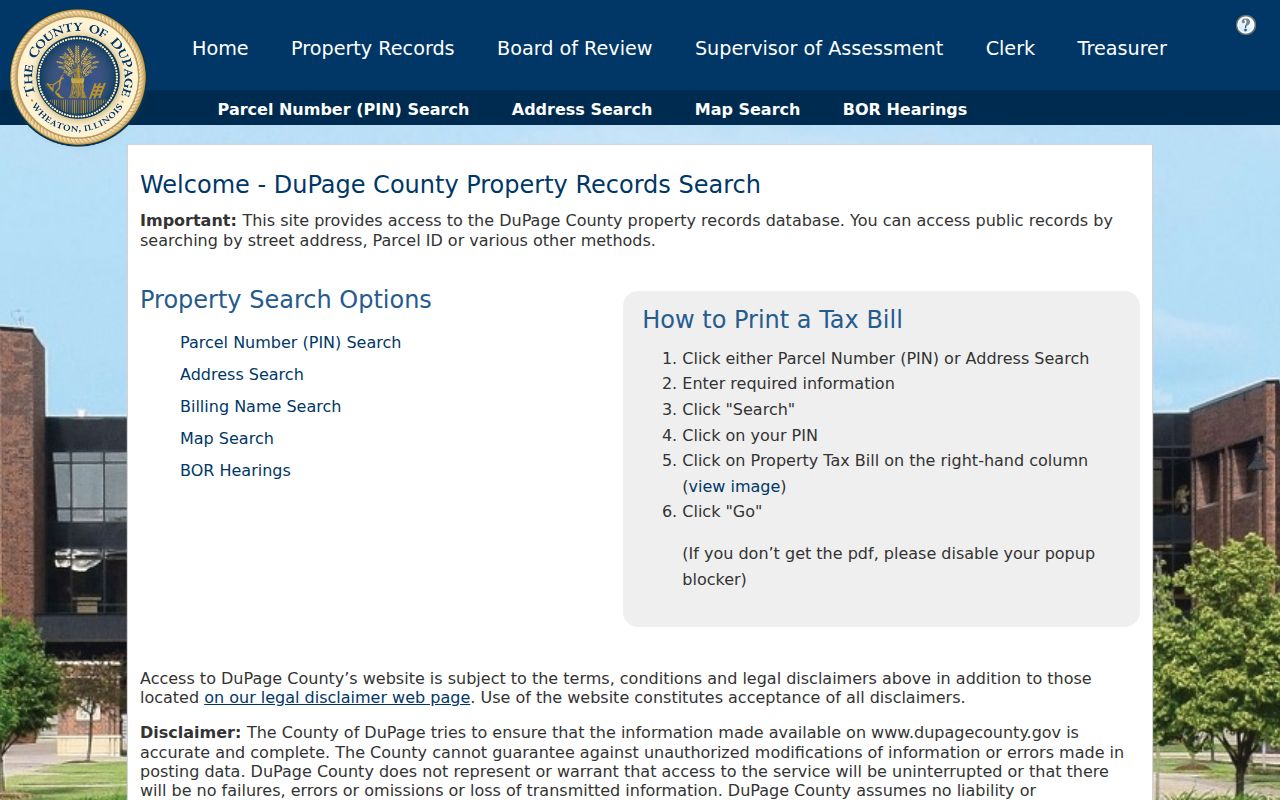
Read the result as owner and parcel information. A billing address may be an office or another location, while the situs address is the parcel itself. Neither field lists every resident.
| Portal choice | Best use in Elmhurst |
|---|---|
| PIN | Stable parcel match and record cross-check |
| Address | Find the situs parcel |
| Billing Name | Test the tax-roll owner or entity spelling |
| Map | See nearby parcel geography |
| Tax year | Compare displayed assessments over time |
Follow Elmhurst Deeds From 1961
The DuPage Recorder Online Documents site supplies indexed documents and digital images beginning March 16, 1961. It extends the public terminals at the Recorder's office. Search routes include a person's name, bank or trust name, subdivision or business name, street, city, PIN, document number, document group, document type, and date range.
The Recorder landing page makes the verified online start date visible.
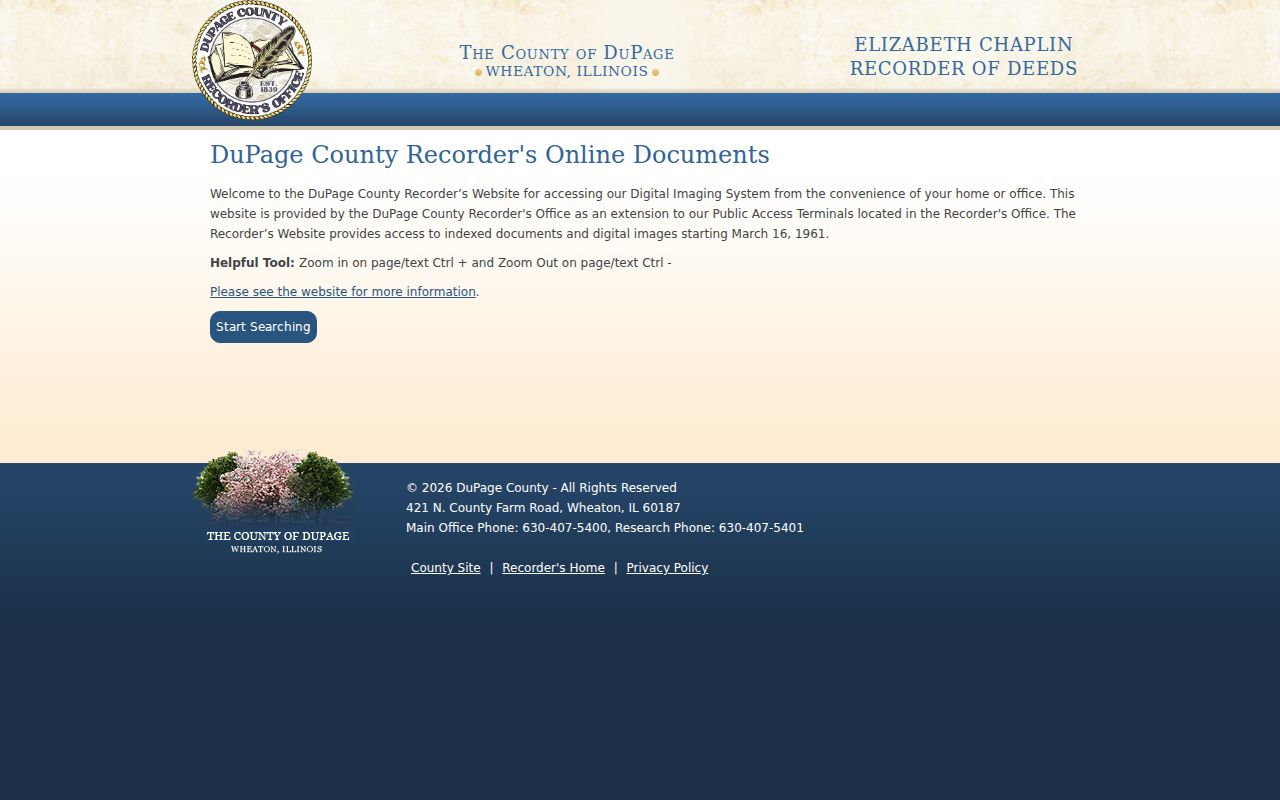
A deed can connect a grantee, the party receiving an interest, with a parcel and recording date. Mortgages, releases, plats, easements, and liens mean other things. For an earlier chain, call the research counter at 630-407-5401, visit the office, and pair the land record with maps and directories.
- Parcel
- A defined piece of land tracked by a PIN.
- Index
- A finding record that points to a document.
- Grantor and grantee
- The parties giving and receiving a recorded interest.
- Criss-cross directory
- A directory arranged by address rather than only by surname.
Note: Pre-1961 deed research needs the Recorder counter or another verified historical channel, not a guessed online date.
Elmhurst Residents Records Desks
Elmhurst is in DuPage County, while Wheaton is the county seat. That fact explains why many Elmhurst searches lead to the county campus. The Recorder, Supervisor of Assessments, County Clerk, Elections Division, Sheriff, and Eighteenth Judicial Circuit each keep a different part of the trail. City Hall remains the right place for Council actions, local licenses, permits, and defined municipal files.
The county campus lists general weekday hours of 8:00 a.m. to 4:30 p.m. Call before a special trip because each counter may follow its own access rules.
Current Elmhurst Directory Sources
Several official systems behave like narrow resident directories, but each covers only the people named by its purpose. The best source depends on whether the question concerns property, an election district, a recorded instrument, a court case, or a civic filing.
| Elmhurst source | Names represented | Keeper | Access route |
|---|---|---|---|
| Property roll | Owners or legal entities | DuPage Assessments | Free public portal |
| Recorder index | Parties to recorded instruments | DuPage Recorder | Web index and office terminal |
| Voter lookup | A matching registered voter | DuPage Elections | Name, address, or district tabs |
| Court index | Parties in public cases | DuPage Circuit Clerk | Limited eAccess and clerk channels |
| Economic interests | Required public filers | DuPage County Clerk | Name, agency, question, report |
An Elmhurst resident lookup works best when a name appears in two records that agree on a middle initial, address, date range, or other non-sensitive detail. A blank result is not proof that no record exists. Restricted, sealed, older, or on-site material may sit outside the web interface.
Use Elmhurst Voter Tools Carefully
The DuPage Voter Lookup has separate name, address, and district tabs. The name route asks for a last name, date of birth, and either the last four digits of a Social Security number or a driver's license number. Those identifiers belong only in a lawful self-check. Never copy or publish them.
The public screen shows the distinct purpose of each route.
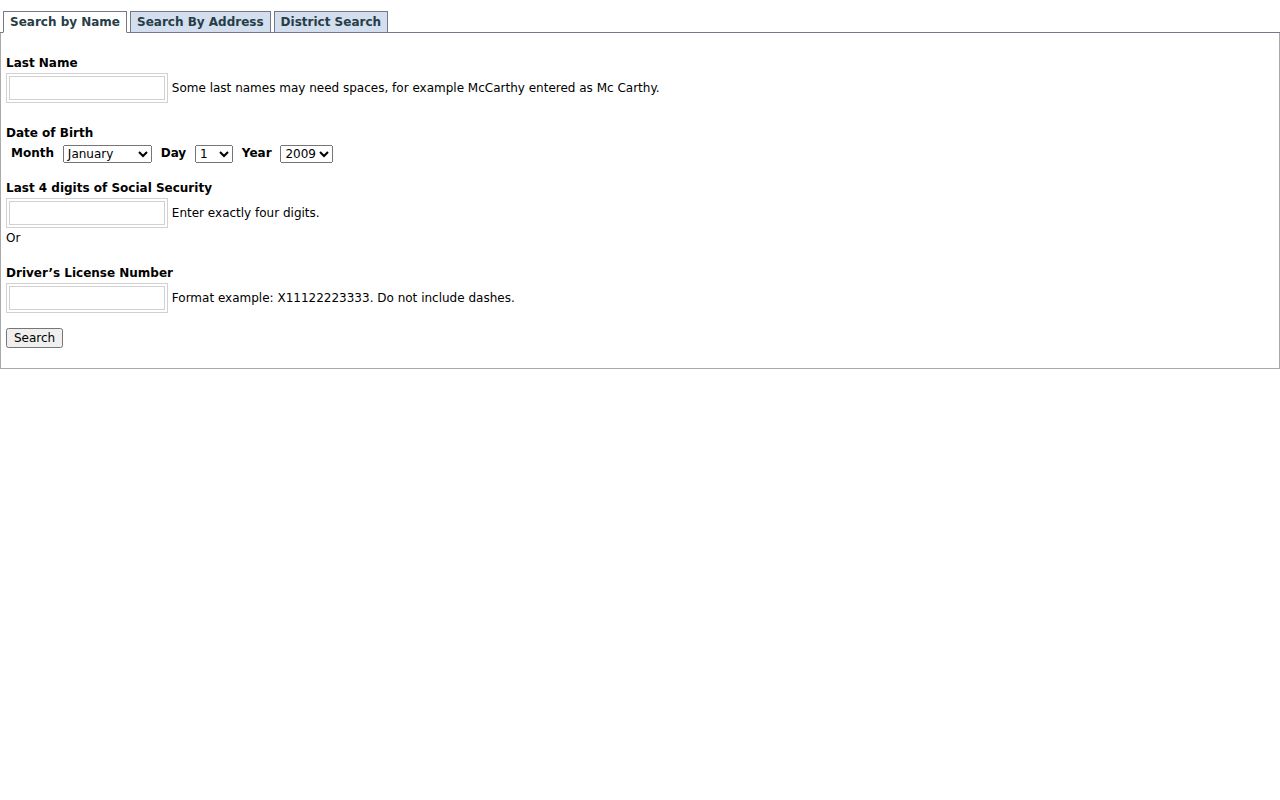
Address search separates house number, street name, direction, suffix, and city. District search can return polling, precinct, committeeperson, or sample-ballot information. Illinois bulk voter data has statutory restrictions and excludes date of birth from the furnished file. Participation history never reveals ballot choices.
Check Elmhurst Municipal Records
The Elmhurst City Clerk keeps the permanent history of City Council actions, records proceedings, and attests ordinances, resolutions, contracts, licenses, and permits. The office is also the local election official and FOIA contact. City Hall is at 209 N York Street, and the Clerk's number is 630-530-3015.
The Clerk page is the local gateway for municipal records.
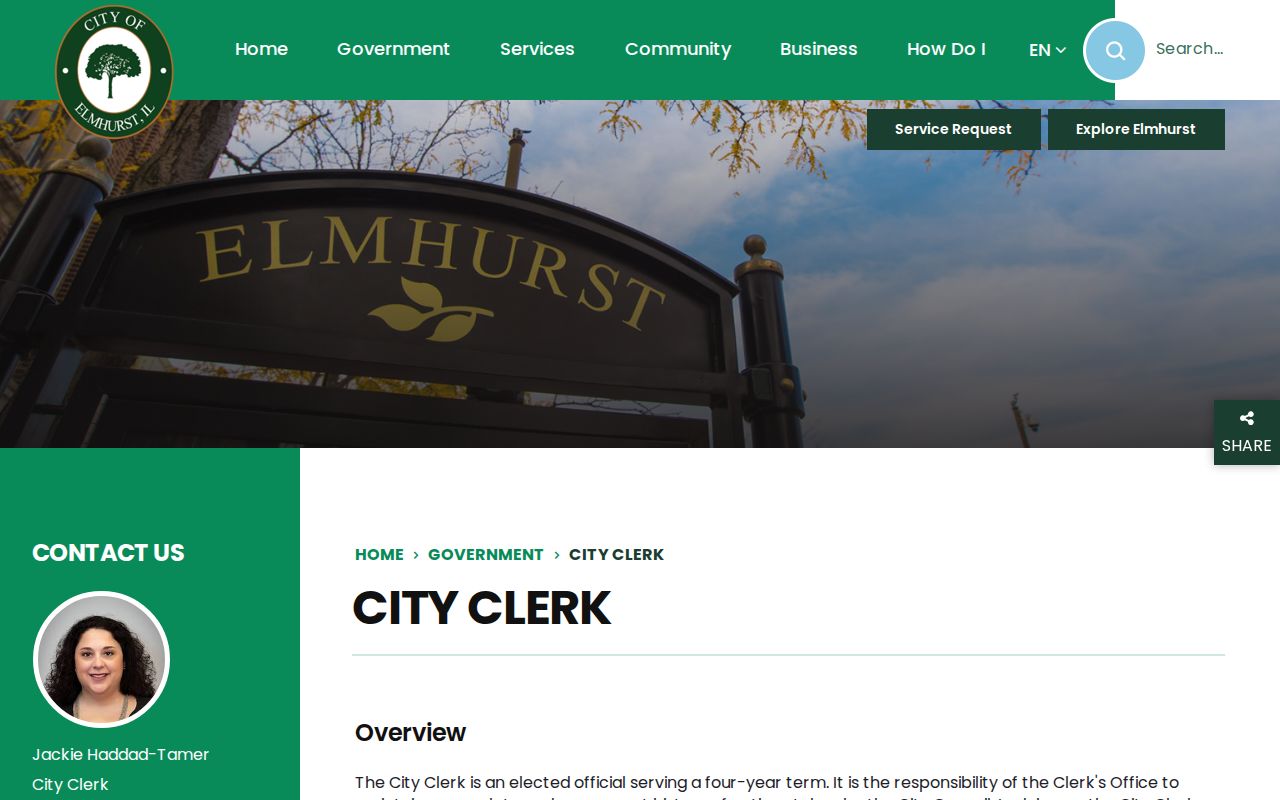
The Citizen Self-Service Portal handles permit, inspection, license, and zoning applications through an account. Research did not confirm an open historical name index. For a record not posted, send a defined request in person, by mail, or to foia@elmhurst.org. Illinois FOIA ordinarily allows five business days for a response and a possible five-business-day extension.
Note: Ask for a record type and date range instead of every City file connected to one person.
Verify Elmhurst Court Matches
Elmhurst trial matters route through the Eighteenth Judicial Circuit and the DuPage Circuit Clerk. The eAccess application can provide a public case lead, status, next date, and docket entries. A docket is the court's chronological list of activity. It is not the same as a final order or certified copy.
Inactive, impounded, sealed, expunged, and juvenile-first-named cases can be excluded from web access. CAPTCHA or a failed query does not settle whether a record exists. Use the Clerk's terminals, public counter, paper request, or courthouse self-help route when the portal cannot answer the question. Federal cases belong to the Northern District of Illinois and PACER branch.
A same-name match needs the case number, filing date, division, and another lawful detail. Never merge two people because their names look alike.
Read Elmhurst Civic Name Files
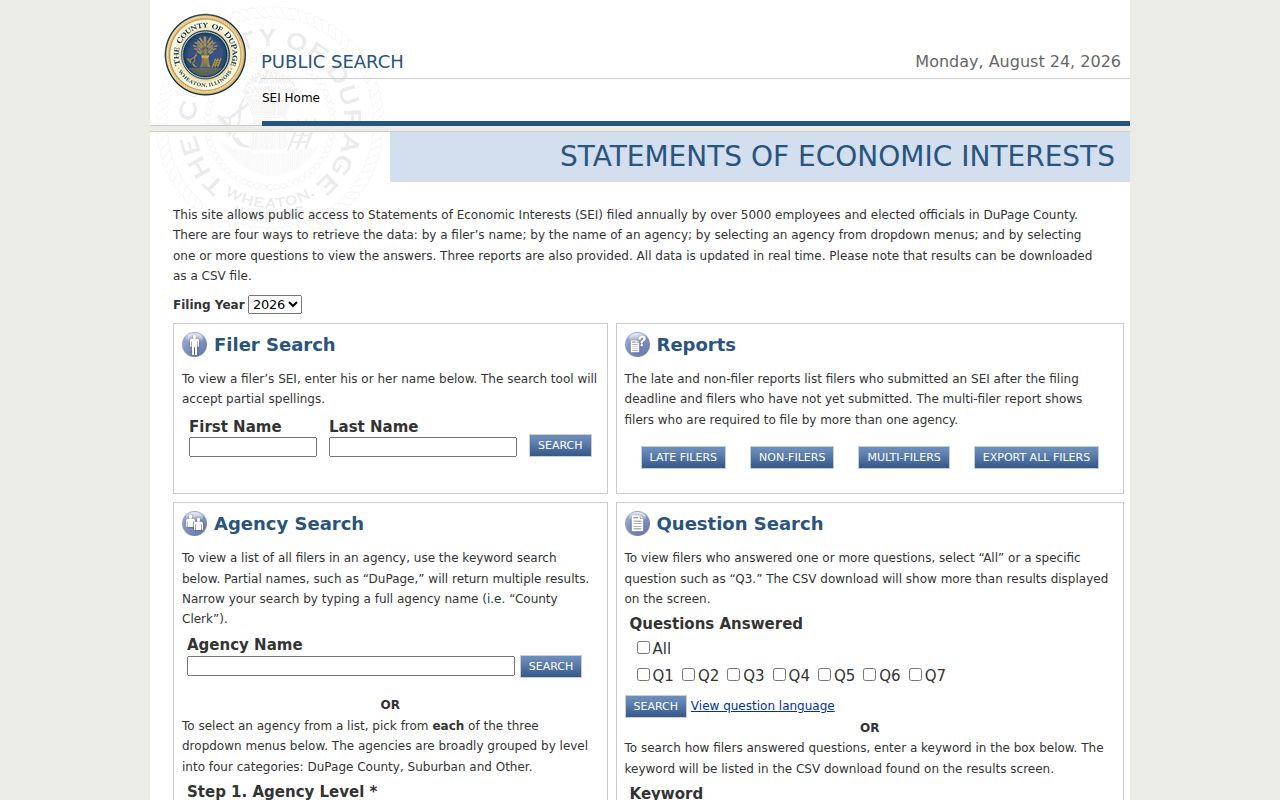
The DuPage Statements of Economic Interests search is a focused civic-name database. Its August 2026 version offers searches by filer, agency, question, and filing year, plus report and CSV routes. A result identifies a required public filer, not every Elmhurst resident.
The current portal presents four ways to retrieve a filing.
Other state systems answer different questions. The Secretary of State searches business entities and registered agents. IDFPR verifies professional licenses. Illinois Treasurer I-Cash searches unclaimed property by name, city, ZIP, or property ID. Record each source's stated status and update date before connecting a match to Elmhurst.
Explore Historical Elmhurst Directories
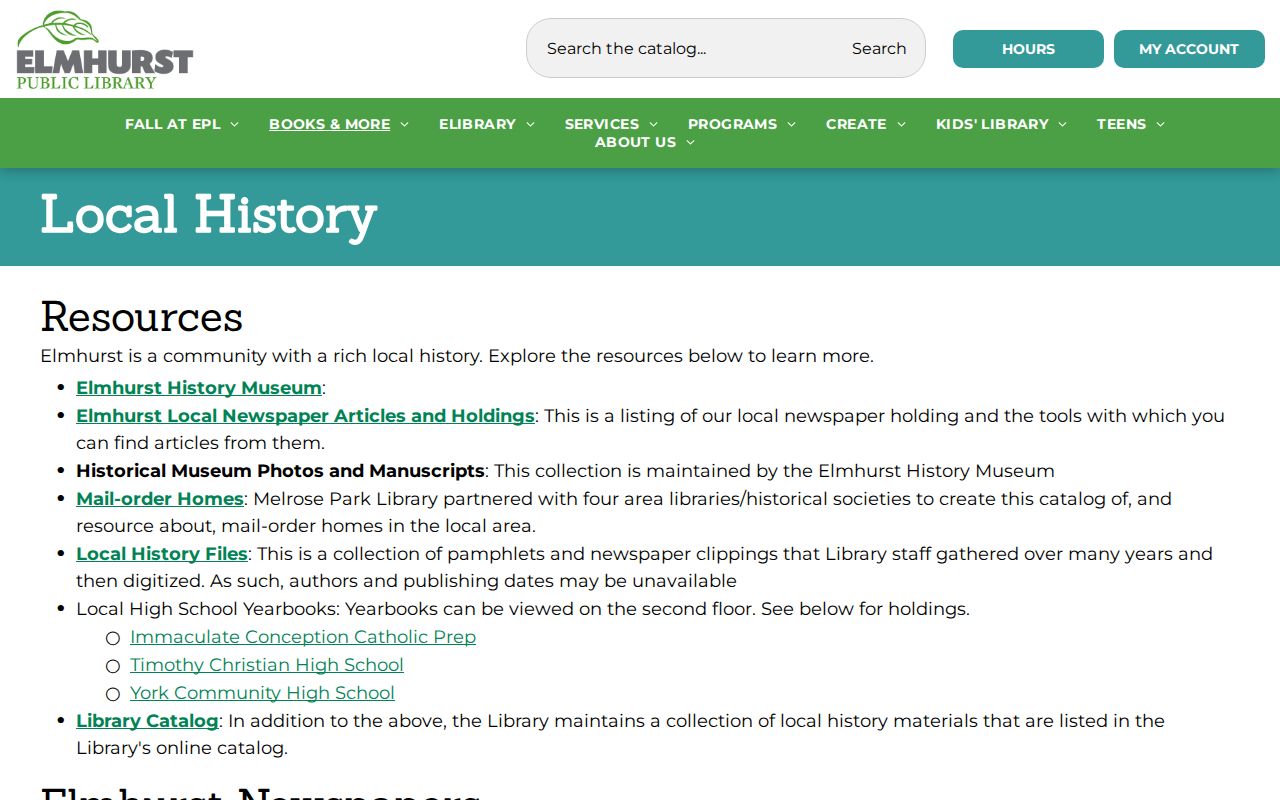
The Elmhurst Public Library local-history collection describes city and telephone directories from 1909 onward, local newspapers reaching back to 1885, York yearbooks, obituary resources, indexes, and microfilm. Some databases and film readers require a visit. A directory line can connect a name with an address, spouse, occupation, phone, or business for a stated year, but its exact printed role must be preserved.
The Library page shows the mix available for a residents directory search.
Regional volumes include a 1915-16 Du Page County and Wheaton directory and 1928-29 Elmhurst-Lombard-Villa Park and Du Page Community directories. Use the full Elmhurst city directory collections to read abbreviations or follow a household across years. Pair each hit with a census, deed, obituary, or map instead of carrying an old address into the present.
Bridge Elmhurst Newspaper Fire Gaps
A local paper search has two known breaks. The Elmhurst Press run is missing from 1899 through 1918 and from December 1922 through December 1928 because of fire losses. The Elmhurst Enterprise microfilm ends in 1899. A blank search in those years is therefore a source gap, not proof that a family, transfer, or event left no trace.
Work around the break with directories, Wheaton Illinoian microfilm for listed years, Sanborn maps, cemetery and funeral records, church files, deeds, IRAD series, and museum manuscripts. Pastfolio restores a later trail for 1918-1921 and 1929-2008. Library microfilm readers can print, edit, merge, enhance, save, and email JPG, TIFF, or PDF files, which helps preserve an exact page citation.
Ask Elmhurst History Specialists
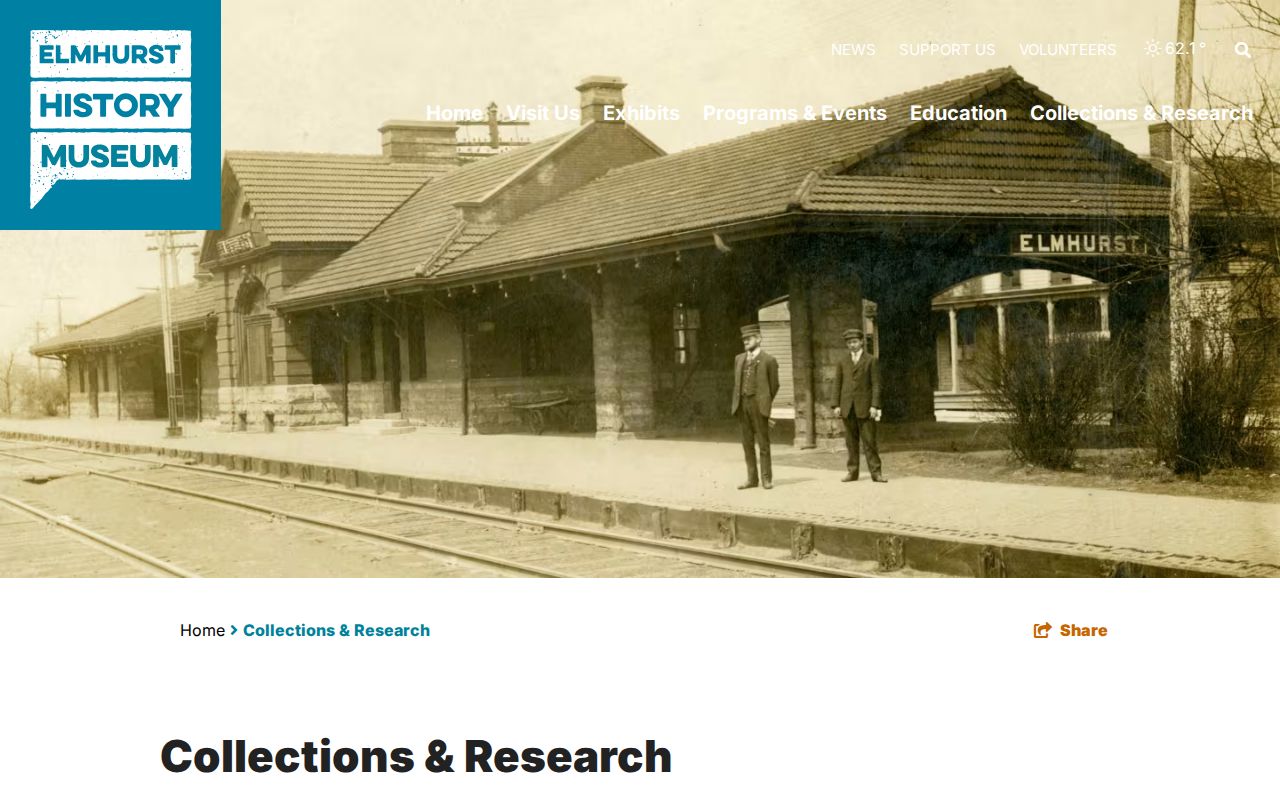
The Elmhurst History Museum research room holds directories, phone books, Sanborn maps, biography files, cemetery and funeral records, census and vital-statistics material, church records, photos, and manuscripts. Research is by appointment at 120 E Park Avenue. CatalogIt offers keyword, browse, and Boolean access to thousands of digital items.
The collections overview shows why a human archivist matters when the directory trail crosses names, streets, and eras.
Ask the Historian welcomes questions about street names, monuments, ancestors, and house history. Ted Kross's digitized hand-drawn family trees supply surname leads for early Elmhurst families. Treat a tree as a lead and confirm it with a directory, obituary, vital record, or IRAD series.
Protect Elmhurst Address Privacy
Illinois public records can contain addresses, yet access differs by record. Vital certificates remain restricted by relationship and property-right rules. Court files may be sealed, impounded, or expunged. Public offices can redact details under Illinois FOIA exemptions while releasing the nonexempt part.
The Illinois Attorney General's Address Confidentiality Program supplies a substitute address to eligible survivors of domestic violence, sexual assault, human trafficking, or stalking. It does not erase records already public, and property-record confidentiality is not guaranteed. Never try to defeat a protected address.
Understand Elmhurst ZIP Boundaries
Elmhurst's main postal identity is 60126, but postal geography and city limits do not draw the same line. Census data identifies four ZCTAs touching the Elmhurst place: 60126, 60163, 60181, and 60523. A ZCTA is a Census statistical approximation, not a live USPS delivery rule.
For one home, use the USPS ZIP Lookup, then keep its result separate from the assessor's situs city and ZIP, a Census ZCTA, or a boundary map. The difference may be valid. Local terms such as York Street, the Metra line, Park Avenue, and the Glos Mansion can also resolve an old description, but any inferred address needs a map or parcel check.
Track Elmhurst Records Through Time
The keeper changes with the era. Before Elmhurst became a village in 1882, many useful names sit in township, county, land, church, cemetery, and newspaper records. Village minutes and ordinances cover the years from incorporation through the city's 1910 reincorporation. The City Clerk now describes a complete permanent history of City Council actions, while the History Museum also preserves Village Board and Council minutes, civic anniversary files, phone directories, photos, slides, and audio material. Searching both Cottage Hill and Elmhurst can help with material around the 1870 name change.
County and state systems have their own timelines. IRAD's DuPage inventory lists marriages beginning in 1839, births from 1877 through 1919, deaths from 1877 through 1928, naturalization series, government minutes, and Elmhurst Public Library Board minutes from 1912 through 2002. Illinois death recording began in 1916. Records before that point generally route to the county clerk or IRAD, while later certified and genealogy access depends on the event, age, and requester's eligibility.
Digital dates mark access changes, not the birth of a record. Recorder images start online in 1961, civil electronic court records became official in DuPage in 2014, and later e-filing migrations changed how newer cases are handled. Older paper or microfilm may still exist at a counter or archive. The source name, coverage span, and access channel belong beside every result.
A current civic artifact shows how future records begin. The 2026 Elmhurst250 bell is planned for permanent installation at the History Museum beside a time capsule after its public debut. A later researcher may find that story across the museum catalog, an Explore Elmhurst event notice, City Council material, and exhibit records. Each source will document a different part of the same event.