
Elmhurst Directory Collections by Year
Elmhurst has several overlapping shelves, not one complete annual run. The Elmhurst Public Library describes city and telephone directories reaching back to at least 1909, but it does not publish a year-by-year inventory online. The Elmhurst History Museum also holds City of Elmhurst directories and telephone books. Regional books fill a few useful intervals, especially when a family lived near a municipal edge or used a neighboring postal place.
| Collection | Years | Where Held | Access |
|---|---|---|---|
| Elmhurst city and telephone directories | Back to at least 1909 | Public Library and History Museum | Microfilm, local shelf, or appointment |
| Du Page County and Wheaton | 1915-1916 | Regional directory holdings | Locate with archive staff |
| Elmhurst, Lombard and Villa Park | 1928-1929 | Regional directory collection | Useful near city edges |
| Du Page Community | 1928-1929; 1933-1934 | Run noted in a 1999 guide | Confirm volume access |
| York High School yearbooks | 1922-1930; 1942-1950 shown | History Museum archive | Digitized runs |
Exact gaps must be marked, not guessed. A listed span does not prove every year survives. Start with the Library local-history collection, then ask the Museum to check its shelf. Record the full title, year, page, and access method for each match.
Regional titles deserve special care. “Du Page County,” “Du Page Community,” and the combined Elmhurst, Lombard and Villa Park book describe different coverage areas. Search the title page before assuming an Elmhurst address falls inside. A regional entry can solve an edge case, but its place label should be copied as printed. If the volume has both name and street sections, cite which one produced the match.
Elmhurst Library Directory Desk
The Elmhurst Public Library at 125 S Prospect Avenue is the main practical stop for directory research. Its local-history resources combine city and telephone directories, maps, published histories, school yearbooks, local newspaper files, and reference help. A name that fails in a modern index may still appear under a street, school, church, firm, or older spelling. Staff can help choose an approximate decade before a searcher starts turning film.
Older Library material says its microfilm readers can print, edit, merge, enhance, save, and email JPG, TIFF, or PDF images. Confirm the current equipment before visiting. Save the title page and abbreviation key with each city directory entry. The Library also lists Ancestry Library Edition and FamilySearch affiliate access as library-only resources. Other newspaper and obituary products have their own date windows, so note which database returned a match.
Newspaper coverage is broad but uneven. The Library lists the Elmhurst Independent, Elmhurst Suburban Life, Elmhurst Doings, and the Elmhurst University Leader in various digital windows. Its citation indexes cover additional periods, while paper and microfilm runs fill parts of the twentieth century. An index citation may lead to an article that is only available inside the Library. Bring the exact paper title, date, page if shown, surname, and address to the desk. That short list is far more useful than asking staff to search every record about one person.
Reading Elmhurst Directory Entries
No official source exposed a sample Elmhurst directory page or its exact abbreviation key during research. Do not import meanings from another town's book. Capture the printed key from the same volume and preserve each role exactly as shown.
| Publication | Title, year, page, section, and image citation |
|---|---|
| Person | Surname, given name, initial, spouse or household notation |
| Address | Street heading, house number, and any work address |
| Context | Occupation, employer, phone, owner or renter mark only when printed |
| Cross-reference | Alternate spelling, classified note, or pointer to another entry |
A city directory line is a dated lead, not proof of present residence. A telephone book may identify only the subscriber. A business address may belong to an employer. Cross-check the line against a map, newspaper, census schedule, or parcel record.
- Criss-cross directory
- A street-order index used to move from an address to the name printed beside it.
- Householder index
- A list organized around a household name or address.
- Abbreviation key
- The volume's guide to shortened words and symbols. Save it before interpreting an entry.
Elmhurst Press Fire Gaps
Blank search results have a local cause in two long periods. The Library says an Elmhurst Press fire removed the 1899-1918 run and the period from December 1922 through December 1928. The missing paper is not evidence that a person, address, or event was absent. It is a gap in one source.
Other records can bridge it. The Elmhurst Enterprise survives for 1894-1899, while regional papers include parts of the Wheaton Illinoian from 1885-1889. Directories reach into the early twentieth century. Sanborn maps can establish a structure or street layout without naming an occupant. Deeds, vital records, and municipal minutes can supply a dated fact when the local press cannot.
A good substitute search uses the same name and address in several places. Try the City Clerk's permanent Council history for municipal action, the Museum's manuscript files for local groups, and IRAD for county series. The result may still be incomplete, but the surviving sources show exactly where the trail resumes.
Pastfolio Indexes Elmhurst Names
The History Museum's manuscript archive provides an unusually local recovery tool. Volunteers scanned and indexed the Elmhurst Press for 1918-1921 and 1929-2008 in Pastfolio. Search a surname, street address, business, club, school, or event, then retain the publication date and citation. The archive also indexes the Elmhurst Independent from 2015 to the present.
Open the Elmhurst manuscript archive before a research visit.
The archive screen shows the route to newspaper indexes and digitized York yearbooks that can support an Elmhurst city directory lead.
Elmhurst Museum Directory Research
The Elmhurst History Museum research room is at 120 E Park Avenue in the Glos Mansion. Reference work is by appointment. Holdings include City directories, telephone books, census records, church records, cemetery and funeral files, vital-statistics material, biography files, Sanborn maps, manuscripts, and thousands of photographs. These sources help distinguish a household listing from a business, institution, or namesake.
The Museum digital archive supports keyword, subject, and Boolean searches.
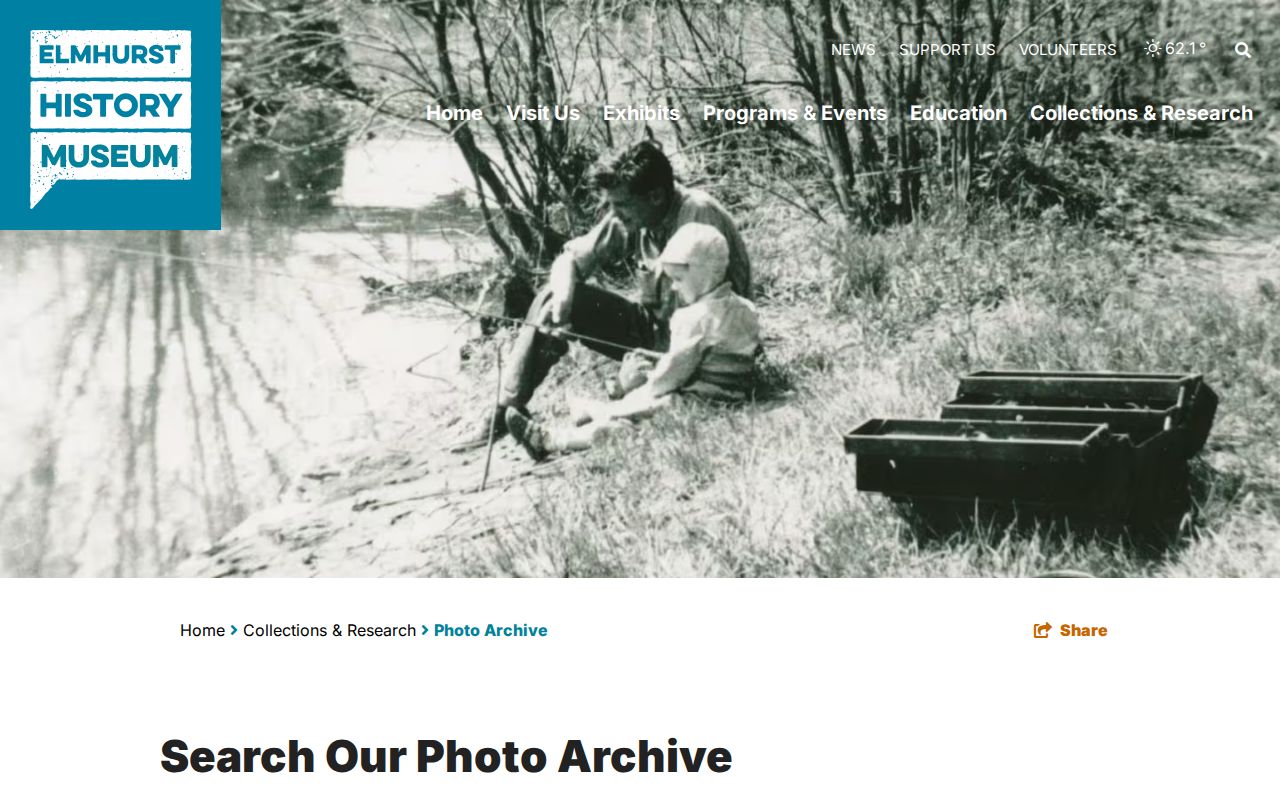
The catalog is a photo and manuscript collection, not a complete people index. Use a hit to identify a collection, then ask staff for the linked file.
The Museum was founded in 1957 and is operated by the City of Elmhurst. Its archive reaches beyond directories to family papers, club scrapbooks, Village Board and City Council minutes, photographs, slides, and audio. Those records can place a name in a civic event or organization without proving a home address. Reference appointments are the right access channel when the online catalog shows only a summary. The Museum also offers an Ask the Historian form that specifically welcomes questions about street names, neighborhood monuments, childhood events, and local history.
Elmhurst Family Trees Add Context
Ted Kross's hand-drawn and lettered family trees connect early Elmhurst surnames with spouses, children, and family lines. They are valuable when a city directory entry points toward genealogy rather than a current person search. The links can suggest alternate spellings or relatives to test in newspapers, vital indexes, and census records.
Browse the Elmhurst family-tree collection and contact the Museum curator when a branch needs support.
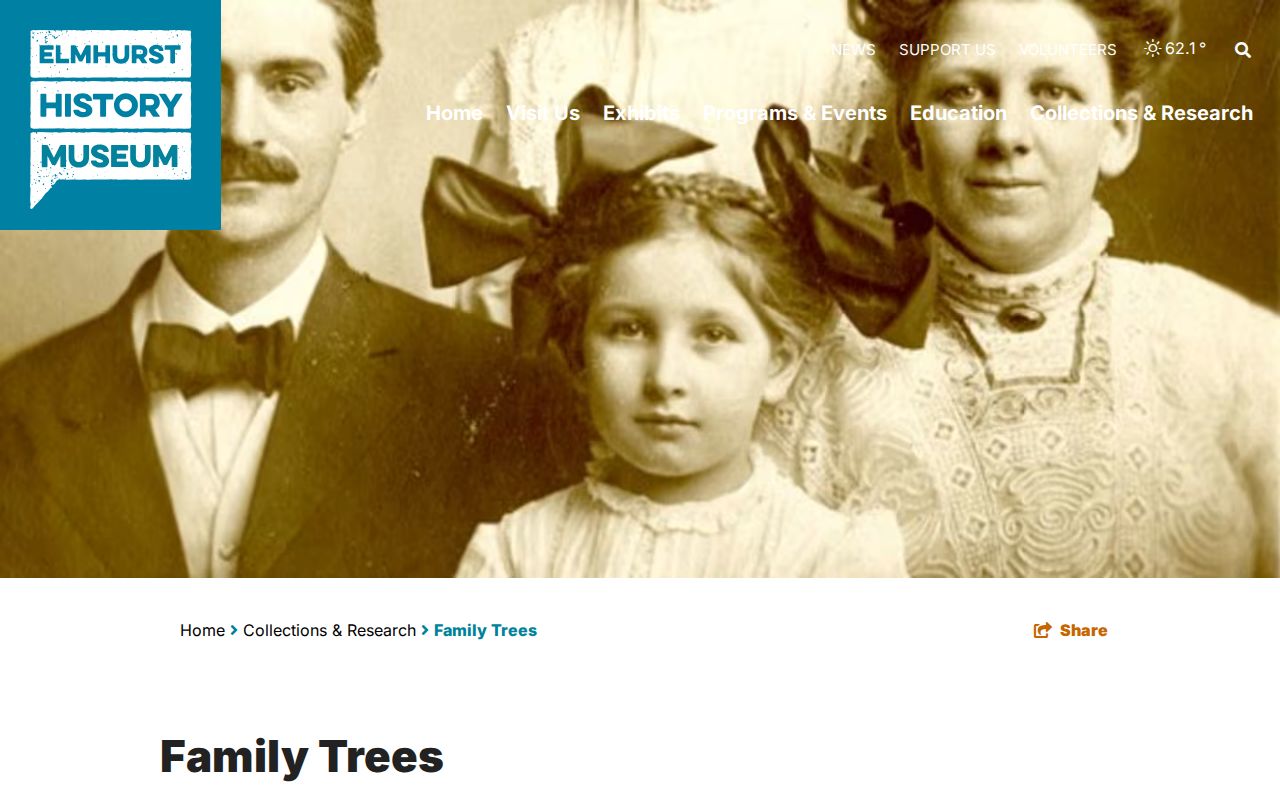
The surname screen can turn one old listing into a testable family line, but each relationship still needs a record created near the event.
Map Elmhurst Directory Addresses
Historical maps explain why an address may fail even when a family stayed nearby. The Museum provides Elmhurst maps for 1885, 1910, 1933, 1949, 1974, and 2023, plus subdivision, annexation, residential-construction, and Sanborn resources. Early material may say Cottage Hill, the name used before Elmhurst in 1870, or describe a village before city reincorporation in 1910.
Compare the entry with the Elmhurst historical map collection.
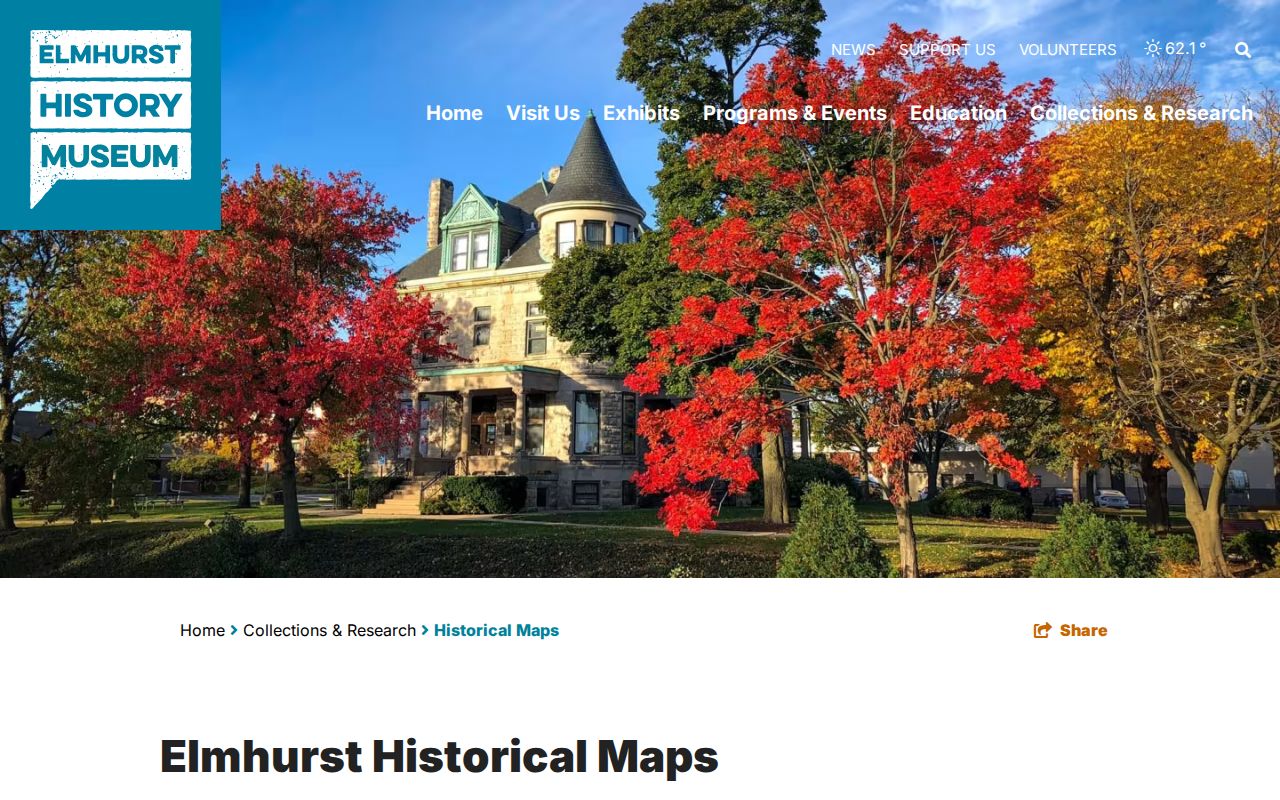
A map can confirm the street grid, building footprint, subdivision, or annexation context. It does not name the people inside a structure.
Trace Families Through Elmhurst Directories
Follow a household in small, documented moves. A year-specific listing can connect census decades, while newspapers and vital records can explain why a name appeared, changed form, or vanished. Federal census schedules through 1950 are generally public under the 72-year rule. The 1890 schedules were largely destroyed, so local directories can be especially useful around that gap.
- Normalize the surname, initials, spelling variants, and likely decade. Keep a citation for every match.
- Find the name in an Elmhurst city directory and save the title, year, page, address, and role.
- Check nearby years for a move or change. Use street-order access only when that volume supports it.
- Pair the address with census schedules, Sanborn maps, and parcel data. Keep owner, subscriber, and occupant claims separate.
- Search obituary indexes, Pastfolio, cemetery or funeral files, and yearbooks to explain a gap.
- Use IRAD, the County Clerk, or state vital-record channels for the formal event record.
Disappearance from a directory may reflect a move, death, unlisted phone, publication gap, changed spelling, or a shift in who held the subscription. One missing year cannot decide which cause is right. Modern address work belongs in the Elmhurst street directory, where parcel sources are handled in full.
For older formal records, the Illinois Regional Archives Depository inventory for DuPage County is another fallback. It lists birth, death, marriage, naturalization, government-minute, library-board, and school-board series with different year ranges. IRAD research can proceed by visit, mail, or phone under its request rules. State and county vital-record offices have separate eligibility limits, so a city directory hit does not create access to a restricted certificate. Keep the archive series title and custodian beside each fact in the research log.